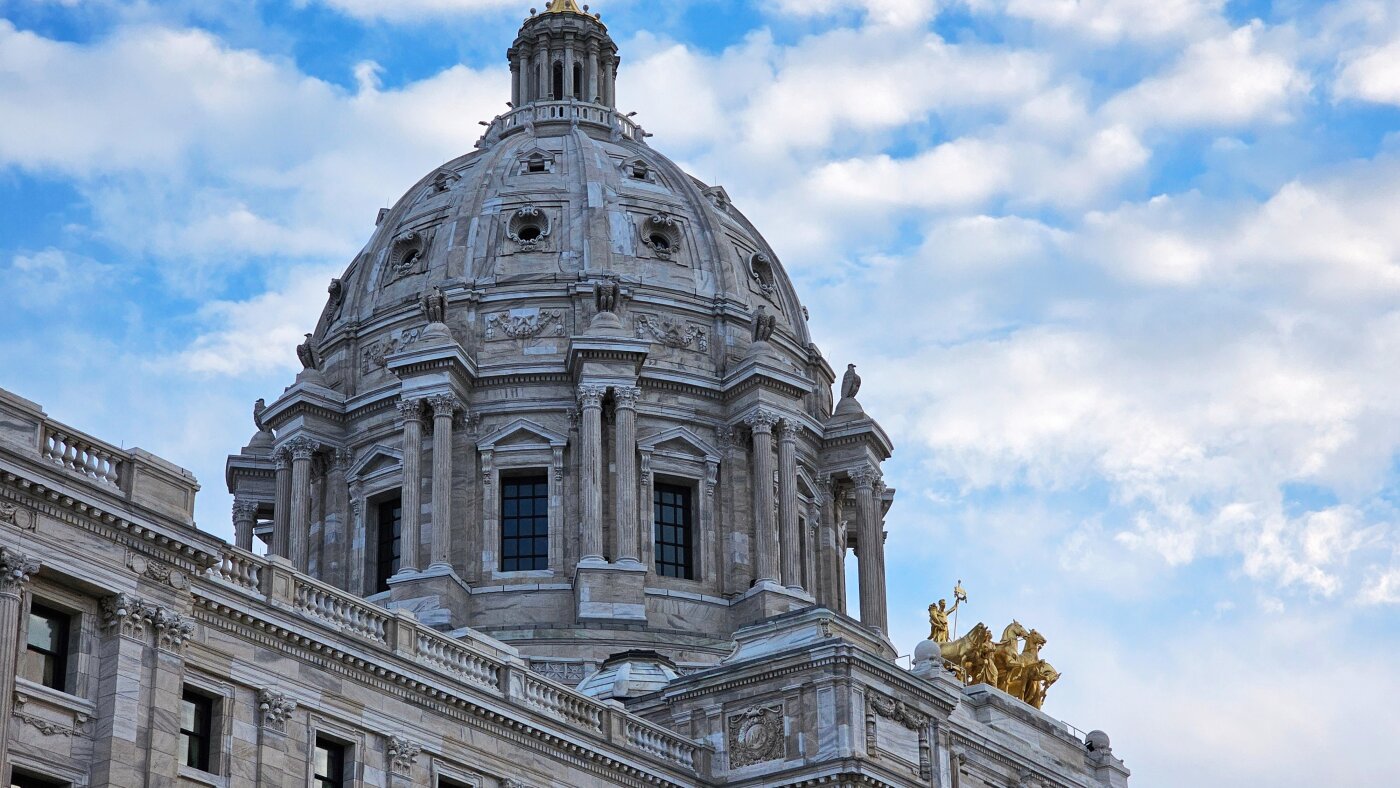
Achieve your financial goals with our platform. Minnesota has enacted legislation making it a felony for prediction market operators such as Kalshi and Polymarket to do business in the state, marking the first statewide ban of its kind. While several states have pursued legal actions against the sector, Minnesota’s law introduces the most severe penalties to date.
Live News
Minnesota Becomes First State to Criminalize Prediction Market Platforms Investors often experiment with different analytical methods before finding the approach that suits them best. What works for one trader may not work for another, highlighting the importance of personalization in strategy design. According to a report from NPR, Minnesota has become the first U.S. state to pass a law specifically banning prediction markets, classifying their operation as a felony. The legislation targets platforms that allow users to place bets on the outcomes of real-world events, including elections, sports, and financial indicators. Companies like Kalshi and Polymarket, which currently operate under varying degrees of regulatory scrutiny at the federal level, would be prohibited from offering their services within Minnesota’s borders. Violators could face criminal charges, though the exact penalties under the new statute have not been detailed in the source. The move comes amid a broader trend of state-level pushback against prediction markets. Dozens of states have initiated legal or regulatory actions against the industry, but Minnesota is the first to enact a blanket statutory ban with felony-level consequences. The law’s impact on existing users or companies headquartered outside the state remains unclear, though it may deter platforms from accepting users with Minnesota addresses. Critics of prediction markets have argued that they can distort democratic processes by creating financial incentives around election outcomes. Proponents, however, contend that such platforms provide valuable forecasting data and are a form of free expression.
Minnesota Becomes First State to Criminalize Prediction Market PlatformsEconomic policy announcements often catalyze market reactions. Interest rate decisions, fiscal policy updates, and trade negotiations influence investor behavior, requiring real-time attention and responsive adjustments in strategy.Investors often monitor sector rotations to inform allocation decisions. Understanding which sectors are gaining or losing momentum helps optimize portfolios.Monitoring multiple timeframes provides a more comprehensive view of the market. Short-term and long-term trends often differ.
Key Highlights
Minnesota Becomes First State to Criminalize Prediction Market Platforms Cross-asset analysis can guide hedging strategies. Understanding inter-market relationships mitigates risk exposure. - The Minnesota law appears to be the first in the nation to explicitly make operating a prediction market a felony, setting a precedent that other states could potentially follow. - The ban covers a range of event-based betting platforms, including those focused on political contests and sports outcomes, affecting major players in the niche industry. - Legal actions against prediction markets have been increasing at the state level, but many previous efforts relied on existing gambling or securities laws rather than tailored legislation. - The federal Commodity Futures Trading Commission (CFTC) has taken a cautious stance on prediction markets, and this state-level move could escalate the debate over regulatory jurisdiction. - For the companies involved, such as Kalshi and Polymarket, the law introduces significant operational risk and may influence their user acquisition strategies, compliance costs, and market expansion plans.
Minnesota Becomes First State to Criminalize Prediction Market PlatformsReal-time alerts can help traders respond quickly to market events. This reduces the need for constant manual monitoring.Many traders use scenario planning based on historical volatility. This allows them to estimate potential drawdowns or gains under different conditions.Combining different types of data reduces blind spots. Observing multiple indicators improves confidence in market assessments.
Expert Insights
Minnesota Becomes First State to Criminalize Prediction Market Platforms Historical precedent combined with forward-looking models forms the basis for strategic planning. Experts leverage patterns while remaining adaptive, recognizing that markets evolve and that no model can fully replace contextual judgment. The Minnesota ban signals a hardening of state-level attitudes toward prediction markets, which have grown in popularity despite regulatory uncertainty. While no other state has yet enacted a felony penalty, the move could encourage legislators in other jurisdictions to consider similar measures. From a market perspective, the development may heighten compliance burdens for prediction market operators. Companies in the space may face a patchwork of state laws, each with different definitions and penalties. This regulatory fragmentation could slow industry growth and increase legal expenditures, potentially affecting valuation expectations for privately held platforms. It remains to be seen whether the federal government will step in to establish uniform oversight, or whether state-level actions will continue to proliferate. Investors and operators should monitor both legislative trends and any potential legal challenges to the Minnesota statute. The outcome of those challenges could shape the future regulatory landscape for event-based trading in the United States. Disclaimer: This analysis is for informational purposes only and does not constitute investment advice.